
Deployment Patterns
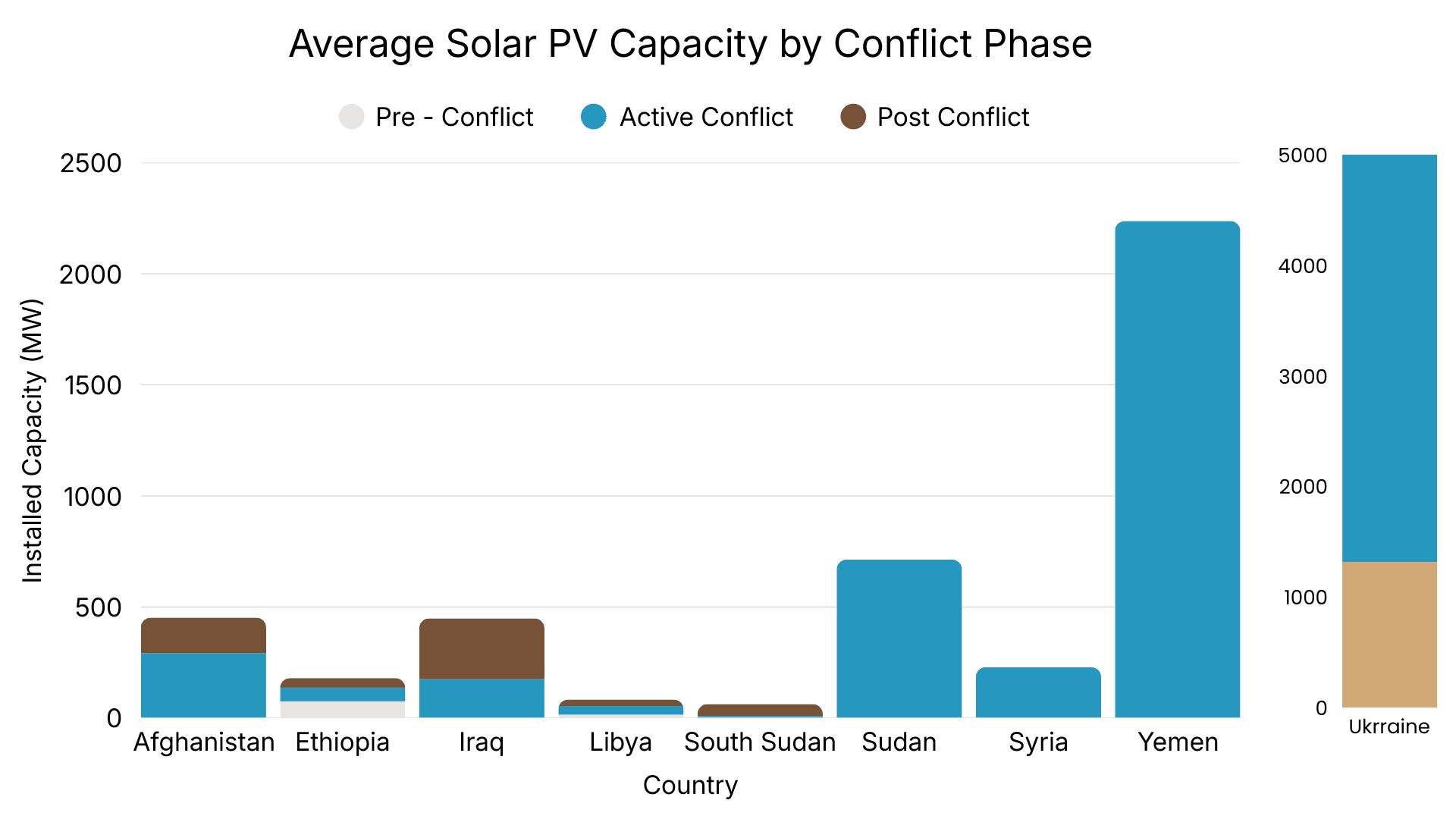
Solar adoption continues, and often accelerates, during active conflict phases, demonstrating its critical role.
Design Guidelines
The design guidelines for the mobile schools are centered on Mobility, Resilience, Sustainability, and Humanitarian Standards.
Key Findings
Product Priority
Imports of portable solutions like solar lamps and lithium batteries increase significantly during crises, reflecting the urgent need for basic household power and safety.
Solar Lamps
40%
PV Modules
60%
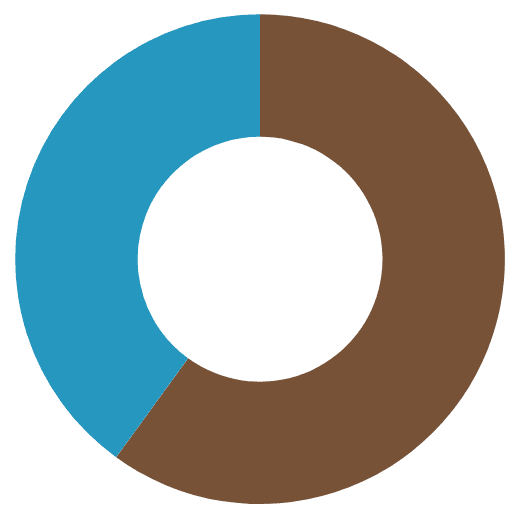
Trade/ Import Data
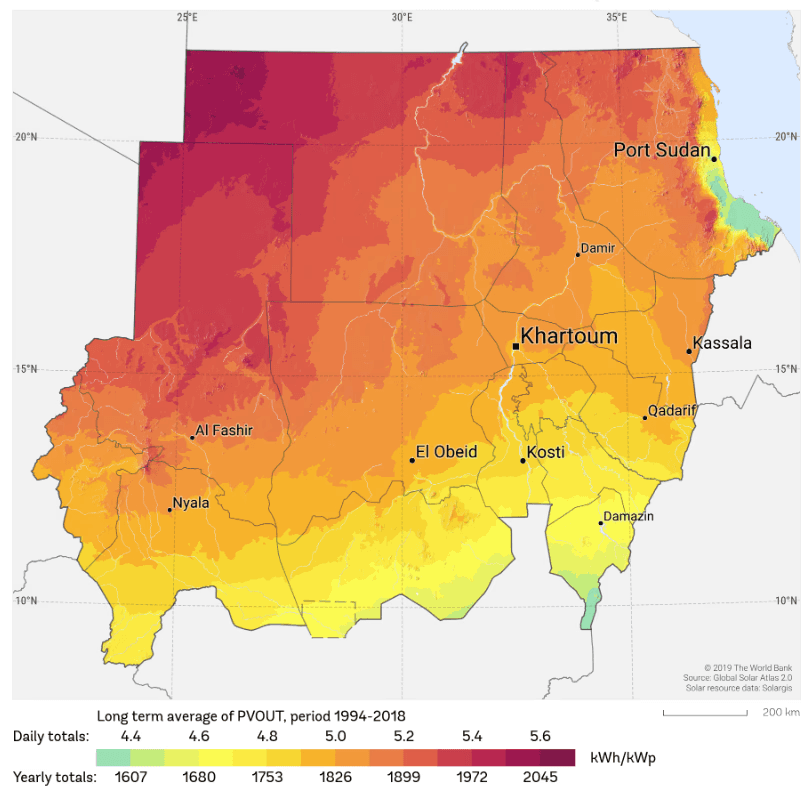
Data Insight:
Sudan averages 5.08 kWh/kWp of daily solar output.
This means a standard solar panel in Sudan produces ~2x more energy per day than the same panel would in London or Berlin, making it a highly efficient "survival infrastructure."
Source: World Bank Global Solar Atlas, 2024.
Why use Solar in Sudan?
01
Massive Daily Sunshine Hrs
Harnesses Sudan's 10+ hours of daily sunshine, eliminating reliance on expensive, scarce, and volatile diesel fuel.
02
Survival Infrastructure
Bypasses the collapsed national power grid, providing decentralized, resilient power for critical needs (water, health, security).
03
Educational Resilience
Creates a stable power source for schools and community centers, ensuring continuous learning and supporting post-conflict recovery.
Our commitment is to provide sustainable and innovative energy solutions, specifically designed to support the continuity of education in crisis zones and meet the needs of affected communities
Design Guidelines
The design guidelines for the mobile schools in conflict zones are centered on Mobility, Resilience, Sustainability, and Humanitarian Standards.
Design for Flexibility and Dual-Use
Prioritize Local Context and Sustainability
Local Materials and Techniques: Use locally sourced materials and adopt collaborative, easy-to-build construction techniques that can be understood and applied by the local community.
Environmental Resilience: Integrate design elements to tackle local environmental challenges, such as renewable energy (due to unstable power supply) and systems to maximize water infiltration for environmental repair (due to damaged aquifers).
Culturally and Gender-Sensitive Design: Ensure the design is sensitive to the local culture, including providing features like separate spaces (e.g., playground/sports space) where girls can exercise without public view.
Integrate Security & Protection Features
Ensure Accessibility and Child-Friendly Standards
Al-Qadaref State, Sudan
Passive Design
Roof
Ventilation
Envelope
Openings
Why Al-Qadaref?
The Resilience Module
16m2
4*4
When centralized infrastructure collapses, education is often the first casualty. To secure and re-establish learning in these volatile environments, our school designs must be resilient, adaptable, and self-sufficient.
A decentralized power source is not just for lights; it is the unbreakable backbone enabling security, flexibility, and sustained learning. It powers critical services like clean water pumps, site security, and digital learning tools, ensuring educational opportunities remain alive even as conflict persists.
Optimal Roof Tilt PV Array
Ventilation/Shading Strategy
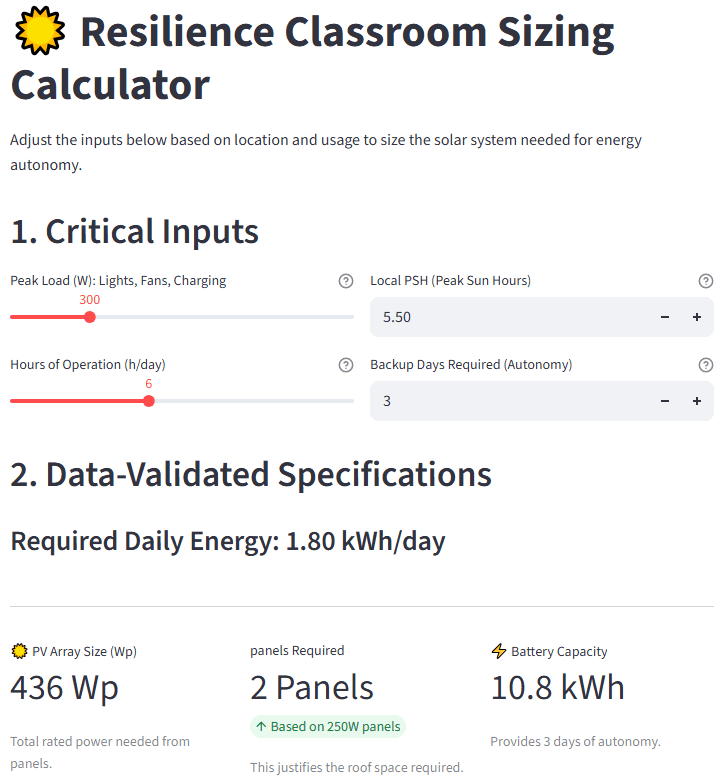
What does it do?
Problem: The school needs (Daily Consumption) kWh/Day to operate.
Solution: The design is verified by data: it requires exactly (Number of Panels) to meet that demand.
Proof: The system provides (Capacity) kWh of storage, ensuring 3 days of autonomy during crisis, validating the entire project's resilience focus.
The roof must accommodate the exact number of solar panels determined by the Python script to run the minimal critical load (lights, fans) for 3 days of autonomy.
The
Result
How big should my solar be?
This design moves beyond conceptual ideas, providing a fully calculated solution for education continuity in crisis zones. By merging geospatial solar data from our conflict analysis project with architectural systems thinking, we guarantee energy autonomy for the Al-Qadaref Resilience Module
© 2025 Ahd Omer Basan. All rights reserved. Built with Framer | Privacy Policy
MIT Emerging Talent - Individual Project. License
To ensure every child in crisis-torn Sudan receives the lifeline of education, protecting a generation from being lost. We raise global awareness and mobilize vital donations to rebuild their future.
Our Mission
Solar Energy in Conflict Zones
This repository investigates how solar energy (PV systems) acts as critical survival infrastructure in conflict-affected regions, where over 130 million displaced people face severe energy poverty.
Centralized power grids are often destroyed or targeted during conflict, creating a humanitarian energy crisis. Lack of reliable energy compromises critical services like hospitals, water supply, communication, and education.
Solar PV systems emerge as a vital alternative because they are decentralized, resilient, and quick to deploy. Our analysis shows that solar adoption often surges during active conflict (a "conflict-driven surge") as communities seek local, self-sufficient power when the grid fails. This proves solar is used for survival—powering essential services and providing lighting and communication—rather than just being an environmental luxury.
Sudan
A survival infrastructure, not just an environmental solution